Posts

Reverse osmosis

Image
Reverse osmosis  ( RO ) is a water purification technology that uses a partially permeable membrane to remove  ions , molecules and larger particles from drinking water. In reverse osmosis, an applied pressure is used to overcome osmotic pressure, a colligative property, that is driven by chemical potential differences of the solvent, a thermodynamic parameter. Reverse osmosis can remove many types of dissolved and suspended chemical species as well as biological ones (principally bacteria) from water, and is used in both industrial processes and the production of potable water. The result is that the soluteis retained on the pressurized side of the membrane and the pure solvent is allowed to pass to the other side. To be "selective", this membrane should not allow large molecules or ions through the  pores  (holes), but should allow smaller components of the solution (such as ...

Principle of the concentration of the solar irradiation, the Solar Thermal Power Plants power plants.

Image
Principle of the concentration of the solar irradiation, the Solar Thermal Power Plants power plants. Solar thermal power plants: Used mainly in the United States, this system concentrates sunlight thanks to mirrors and parabolic dishes. Very high temperatures (from 400 ° C up to 1000 ° C) are then obtained and this heat will turn the water of the boiler into steam. Under pressure, it will activate the turbines that will themselves operate the alternator to produce the alternating current. This type of plant allows, by storing this fluid in a tank, to prolong the operation of the plant several hours beyond sunset. The plant consists of a field of solar collectors called heliostats that concentrate the sun's rays to a fixed focus, located at the top of a tower. In cylindrical parabolic mirrors these concentrate the radiation on tubes filled with a fluid. A similar technology, Fresnel mirrors, uses flat mirrors that pivot around a horizontal axis to follow the Sun...

Top 10 strange in space we were unaware of its existence

Image
Although we do not know what it is that is our vast and infinite universe, what we have found so far is an amazing mixture of weirdness. In her report, published by Business Insider, Sophia Metrocustas presented a list of the most extraordinary things in space that we did not know existed. A huge cloud in space may smell like sugar cane juice The "Bow 2" cloud is the orange-red zone in the center left of the image (NASA / ESO / AIPAC) The author reported that there is a vast cloud known as the "arc b2", consisting of dust and gas located in the center of our galaxy. It contains the form of ethyl formate, the molecule that gives sugarcane juice yeast a unique aroma, and gives the berries a delicious taste as well. Scientists who find a planet may be made of solid diamonds The diamond planet is associated with a neutron star known as a millisecond (Reuters) During the year 2017, a team of international astronomers discovered a planet likely to be made...

Nanomachines can destroy cancer cells in less than three minutes

Image
According to a study published in the journal Nature, chemists from three American and British universities have created Nanomachines capable of destroying cancer cells. These machines are so small that fifty thousand of them, glued together, would be about the width of a human hair. Each motorized Nanomachine is sensitive to a particular protein (ten different specimens have been created). When activated by light beams, they turn on themselves three million times per second, allowing them to pierce a cell. At Durham University, researchers tested their machines on prostate cancer cells and in less than three minutes one of these Nanomachines was able to destroy the cell. Researchers are experimenting with these machines with microorganisms and small fish to see if this is effective in a living organism. They are already experimenting with microorganisms and small fish and hope to be able to breed in rodents soon, before human clinical trials if animal testing is succ...

Eveline Pérezine, the inventor of the electronic printer, died at the age of 93

Image
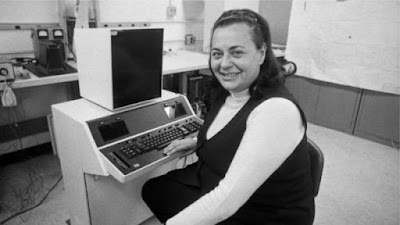
Evelyn Pérezine, the woman who invented what many consider the first email processing, left at the age of 93, and Pérezine launched her invention as Data Secretary when she was promoted by her company in 1971. His company, Redactron, has grown from 9 people to 500 people, according to Business Week, one of the leading business women in the United States in 1976. According to a report prepared by the network " BBC "Arab, Evelyn designed one of the computer flight booking systems, and was tested by United Airlines in 1962, according to the Museum of Computer History, the system worked for 11 years without any interruption of its central system. In an interview in 2015, Perezin said she had created her own project in the mid-1960s after concluding that her chances of success as an employee were still limited, she said. Initially he thought of developing a machine for counting money, but finally decided on electronic word processing. The device, which was develo...

What is in the bottom of the mysterious great blue hole?

Image
Although it has existed since ancient times, the great blue hole in Belize, Central America, still retains its secrets and ambiguity. From time to time, scientific and non-scientific bodies announce an attempt to uncover the mystery of the crater, which was laid on the map in 1971 when French cosmologist Jacques Cousteau explored its depths. Nearly half a century after that attempt, and despite the great development of diving operations, most of the features and terrain of this giant blue hole remain obscure. Jacques Cousteau's grandson, Fabian Costo, recently announced that he was carrying out new research on the crater, as part of an initiative involving scientists, explorers and cinematographers to protect the oceans. A small, manned submarine is expected to reach the depths of the crater, estimated to be about 400 feet deep, and a full survey of the bottom of the crater, about 64 kilometers off the coast of Belize. The crater was thought to have formed part of a gi...

Human activity drives Earth to an era without snow

Image
Scientists have discovered that if humans still do not control gas emissions, we risk putting the climate in a state similar to that of 50 million years ago. According to scientists, in about 20 years the climate could return to a phase similar to that of the Middle Pliocene, more than 3 million years ago. By 2150, the climate could return to its level of 50 million years ago. According to the report of the new study published in "Proceedings of the National Academy of Sciences", man-made change began to take place two centuries ago, accelerating the observed changes. By studying future climate scenarios, the results showed that the Earth's climate could be similar to that of the Middle Pliocene period, where temperatures were more than 1.8 to 3.6 ° C, warmer than today, by 2030. Or 2040. The Panel also found that new climatic conditions, never seen before, could occur, particularly in East and South-East Asia, Australia. North and on the coasts of the Americas...

Climate change will affect winter

Image
US scientists said that the amount of snow accumulated on the mountains was declining year after year, showing another time how dangerous the global warming of the planet was. In addition to decreasing the amount of snow accumulated, the period of appearance of the mountains in white decreases year by year, which means that the winter period gradually decreases with the unprecedented increase in the heat of the planet? Many parts of the world are therefore expected to suffer from a shortage of freshwater, as mountain snow is a vital source for rivers and wells. The frequent fires in forests, as in California, are blatant proof of the early arrival of summer, at the expense of winter. Scientists revealed the latest facts using satellite images confirmed by the official meeting of the American Geophysical Union, the largest gathering of international scientists in geology and space. It should be noted that the last study was the result of a considerable academic and sc...

Archaeologists have found the legendary throne room of Ramses II

Image
The Egyptian government announced the discovery of vestiges of a ceremonial hall, dating from the time of Pharaoh Ramses II, in the 13th century BC. The discovery of this throne room was held in Cairo's Matariya district of the Egyptian capital by a team of archaeologists from the Ministry of Antiquities. Besides the coronation of Ramses II, the room would also have been used for other kings of his time, reports The Egypt Independent. Ramses II, who ruled the country more than three millennia ago, was also known as Rameses the Great for extending the empire from ancient Egypt to Syria and Sudan today. He reigned nearly seventy years from 1279 to 1213 BC and is renowned for his military victories. The archaeological mission of Ain Shams University, located in the Matariya district of eastern Cairo, unveiled the first part of the excavations in April. The second part of the work has just been completed. Beetles and blocks of stone with hieroglyphic inscriptions have also bee...